
Hydroxypropyl Methylcellulose
CAS 9004-65-3 · Hypromellose (HPMC)
The workhorse polymer of oral dosage forms — from film coating and sustained-release matrices to vegetarian capsule shells. Chelora supplies HPMC in E, K and F substitution types across the full viscosity range, meeting IP, BP and USP-NF specifications.
- IP / BP / USP-NF grades
- Non-hazardous transport
- Samples to bulk
3 – 100K
mPa·s viscosity range
CAS number
9004-65-3
Viscosity range
3 – 100,000 mPa·s
Pharmacopoeia
IP · BP · USP-NF
Transport
Non-DG
Product overview
The most versatile cellulose ether in pharma
Hydroxypropyl methylcellulose (HPMC), also known by its INN name hypromellose, is a semi-synthetic, non-ionic cellulose ether prepared by treating purified cellulose with methyl chloride and propylene oxide. The resulting polymer combines hydrophilic and hydrophobic character in a tuneable ratio, making it the single most widely used excipient polymer in oral dosage form design.
In tablet manufacturing, low-viscosity HPMC grades (E5, E6, E15) serve as the primary polymers in aqueous film coating systems, forming smooth, clear films that protect the tablet core, mask taste and improve patient compliance. Higher-viscosity grades (K4M, K15M, K100M) are the standard matrix formers for hydrophilic controlled-release tablets: the polymer swells on contact with gastrointestinal fluid, forming a gel layer that controls drug diffusion and erosion over 8 to 24 hours.
Beyond solid dosage forms, HPMC is used as a demulcent in artificial tear solutions, as the shell material for vegetarian hard capsules (replacing gelatin), as a binder in wet granulation, and as a viscosity modifier in topical and ophthalmic formulations. Its food-grade variant (E464) functions as a thickener and emulsifier, while construction-grade HPMC is added to tile adhesives and cement renders for water retention.
HPMC is classified by substitution type — E (2910), K (2208) and F (2906) — which determines the ratio of methoxyl to hydroxypropoxyl groups, and by viscosity grade, denoted by the number following the letter (e.g. E5 = 5 mPa·s nominal viscosity of a 2 % aqueous solution at 20 °C). Chelora supplies all major types and grades to IP, BP and USP-NF specifications.
Technical specifications
Applications & end uses
Industries that depend on HPMC
Tablet film coating
HPMC is the most widely used polymer for aqueous film coating of tablets. It provides a uniform, glossy, moisture-protective coat that improves swallowability, masks taste and protects active ingredients from light and humidity without affecting dissolution.
Controlled-release matrix former
High-viscosity HPMC grades (K-type, especially K100M) form hydrophilic gel matrices that swell on contact with GI fluid, controlling drug release over 8 to 24 hours. This makes HPMC the backbone polymer in many once-daily oral dosage forms.
Ophthalmic lubricant (artificial tears)
HPMC solutions at 0.2 – 1.0 % concentration are used as demulcents in artificial tear preparations and ophthalmic irrigation solutions. The polymer increases tear film stability and residence time on the corneal surface.
Vegetarian capsule shells
HPMC capsules provide a plant-derived alternative to gelatin hard capsules, meeting vegetarian, halal and kosher requirements. They offer low moisture content and excellent stability for moisture-sensitive fills and hygroscopic APIs.
Food thickener and emulsifier (E464)
Approved as food additive E464, HPMC functions as a thickener, emulsifier and stabiliser in bakery products, sauces, non-dairy creamers and processed foods. It improves texture, moisture retention and freeze-thaw stability.
Construction applications
HPMC is added to tile adhesives, cement renders, gypsum plasters and self-levelling compounds to improve water retention, workability and open time. Construction grades typically use higher viscosity types at 0.2 – 0.5 % concentration.
Available grades
Substitution types and viscosity grades
HPMC grades are identified by substitution type (E, K or F) followed by nominal viscosity. Additional viscosity grades (E3, E6, E50, K4M, K15M) are available on request.
5 mPa·s
HPMC E5 (low viscosity)
Aqueous tablet film coating, sub-coating, sugar coating
15 mPa·s
HPMC E15 (medium viscosity)
Wet granulation binder, enteric coating base
100,000 mPa·s
HPMC K100M (high viscosity)
Sustained-release hydrophilic matrices, once-daily tablets
Packaging options
Sealed and labelled to pharmacopoeia standard
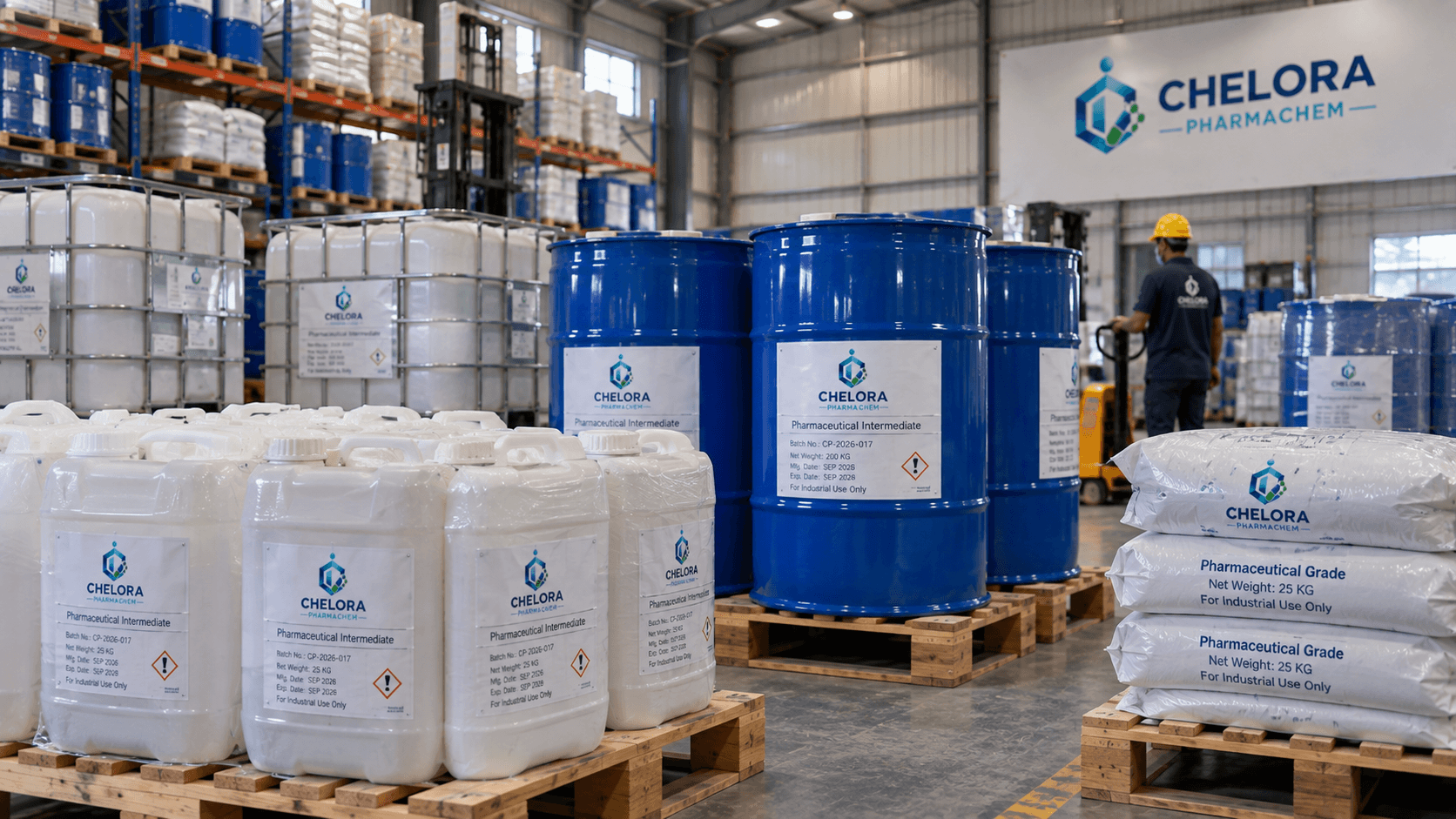
25 kg — Multi-ply paper bag with PE liner
Standard pharmaceutical unit
20 kg — Fibre drum with sealed PE bag
Export and GMP facility supply
Sample — Sealed HDPE container (500 g – 1 kg)
QC evaluation and formulation trials
Documentation supplied
Complete paperwork for QC and regulatory
Certificate of Analysis (COA)
Batch-specific results for viscosity, methoxyl/hydroxypropoxyl content, LOD, pH, heavy metals and microbial limits.
Safety Data Sheet (SDS)
GHS-format, 16-section SDS covering handling, storage, first aid and disposal guidance.
Specification sheet
Grade-specific limit values aligned to IP, BP or USP-NF monograph.
Drug Master File (DMF) reference
DMF filing reference for regulatory submissions where applicable.
Frequently asked questions
Common questions about HPMC
What is the difference between HPMC E-type, K-type and F-type?+
Which HPMC grade is best for tablet film coating?+
Is HPMC suitable for vegetarian and halal/kosher formulations?+
How should HPMC be stored?+
What is the typical lead time for HPMC orders?+
Do you offer samples before bulk purchase?+
Related excipients
Other pharmaceutical excipients from Chelora
Looking for a reliable pharma chemical supplier?
Share your requirements and receive a quote with specifications and documentation.